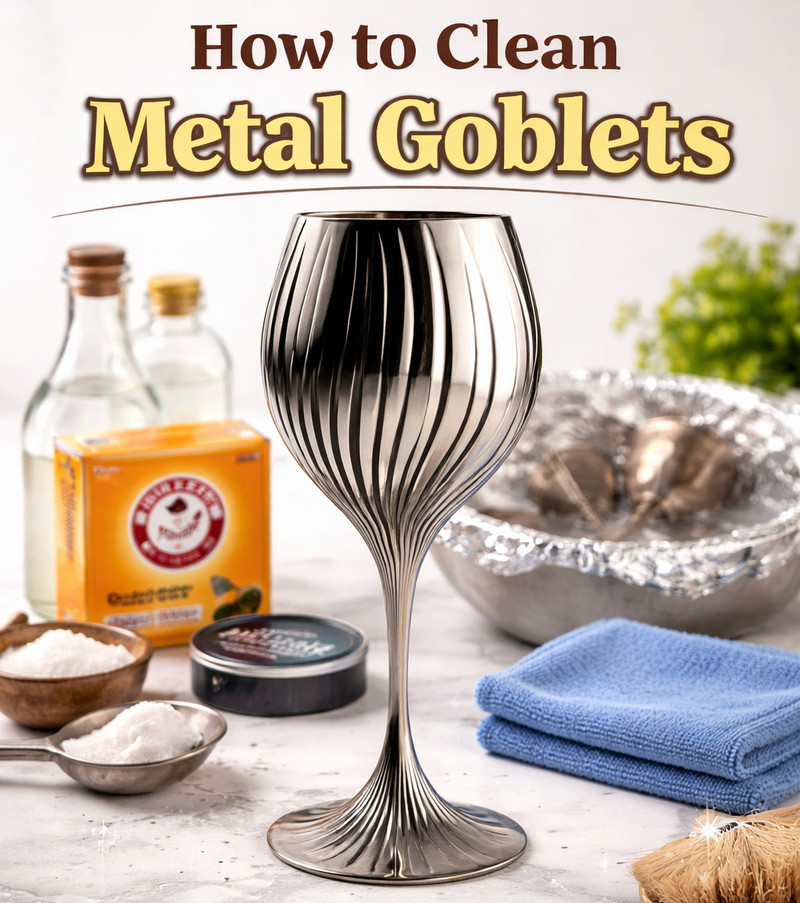

Metal goblets are durable, elegant, and widely used for wine, whiskey, and ceremonial drinking. However, metalware is prone to tarnishing, oxidation, and water spots that can dull its luster.This guide provides a scientifically backed approach to cleaning metal goblets, ensuring they remain safe for use and visually stunning.
Understanding the Material: What Are Metal Goblets Made Of?
Metal goblets are made from various metals, primarily food-safe options like stainless steel, traditionally from silver and pewter, and sometimes alloys like brass.
Why Metal Tarnishes
Most metal goblets tarnish due to a chemical reaction between the metal surface and sulfur or oxygen in the air.
Silver: Reacts with sulfur to form silver sulfide (the black film).
Copper & Brass: Oxidize to form a green patina (verdigris).
Pewter: A softer alloy that can darken but rarely "rusts" in the traditional sense.
Knowing the material is the first step to cleaning metal goblets correctly.
Quick Reference: The Metal Cleaning Cheat Sheet
Best for Routine Clean | Best for Tarnish Removal | Strictly Forbidden | |
|---|---|---|---|
Pewter | Warm water + Mild Soap | Flour + Vinegar Paste | Dishwasher, Bleach |
Silver | Warm soapy water | Baking Soda + Aluminum Foil | Rubber gloves, Scrubbers |
Copper | Warm soapy water | Lemon + Salt | Bleach, Steel Wool |
Stainless Steel | Dish soap | Vinegar + Baking Soda | Chlorine Bleach |
1. How to Clean Pewter Goblets
Pewter is a soft alloy (mostly tin) with a low melting point. It develops a natural patina over time that many collectors prize. If you want to maintain a bright finish, avoid abrasive scrubbing, which can permanently scratch the surface.
Gentle Cleaning (Everyday Use)
Routine Clean: Wash in warm (not hot) water with mild dish soap. Dry immediately.
Deep Clean Recipe: Mix 1 cup white vinegar with 1/2 cup flour and 1 tsp salt to create a paste. Apply to the goblet, let sit for 15-30 minutes, then rinse and buff.
Important Things to Avoid
Dishwasher: Never put pewter in a dishwasher; heat and harsh detergents can warp or dull the metal.
Abrasives: Avoid abrasive cleaners, scouring pads, or harsh chemicals.
Heat: Don't store near heat sources or put hot drinks in pewter.
Long Soaks: Clean and dry immediately after use; don't let liquids sit.
2. Clean of Silver Goblet: The Foil Method
Silver tarnish is actually silver sulfide. Rather than scrubbing it off (which removes layers of silver), you can use an electrochemical reaction to reverse it, turning the sulfide back into silver.
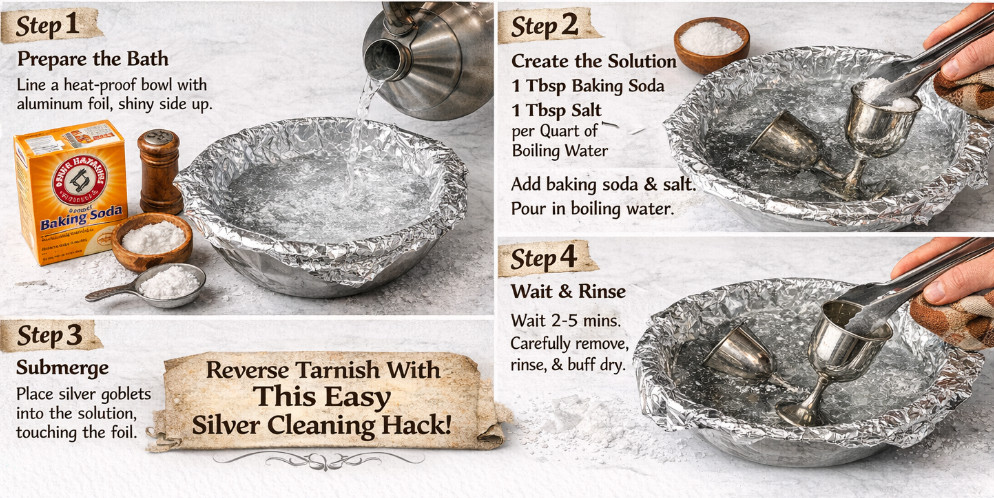
2.1. Prepare the Bath:
Line a heat-proof bowl or sink with aluminum foil, shiny side up.
2.2 Create the Solution:
Add 1 tablespoon of baking soda and 1 tablespoon of salt for every quart of boiling water. Pour into the foil-lined container.
2.3 Submerge:
Place your silver goblets into the water. They must touch the aluminum foil for the reaction to occur.
2.4 Wait & Rinse:
Wait 2-5 minutes until the tarnish disappears. Remove carefully (it will be hot), rinse with fresh water, and buff dry.
3. Copper & Stainless Steel
Copper and Brass Goblets:
These metals are prized for their warm glow. To restore them:
Create a paste using lemon juice and baking soda.
Apply gently with a soft cloth in circular motions.
The mild acidity of the lemon breaks down the oxidation without damaging the structural integrity of the metal.
Stainless Steel:
Stainless steel is durable but prone to fingerprints and mineral deposits.
Use a pH-neutral dish soap and warm water.
For stubborn water spots, a 1:1 mixture of distilled white vinegar and water works wonders. Always wipe in the direction of the metal's grain.
Professional Preservation Tips from Fordcio
To ensure your collection stands the test of time, Fordcio experts recommend these advanced preservation techniques:
Use Microfiber Only: Traditional paper towels contain wood fibers that can create microscopic scratches on soft metals like gold and silver.
Cotton Gloves: When handling polished goblets, skin oils (which contain salts and acids) can cause "fingerprint etching."
Silica Gel Storage: Store your goblets in a dry felt-lined cabinet with silica gel packets to minimize humidity.
When to See a Professional
If your goblet is a valuable antique or features intricate engravings, DIY cleaning might pose a risk. Excessive scrubbing can "over-clean" an antique, removing the desirable "aged" depth in the crevices that collectors value. Furthermore, if you notice deep pitting or "red rot" (in copper alloys), it is time to consult a professional conservator.
Conclusion
Cleaning metal goblet is a blend of art and science. By choosing the right pH-balanced cleaners and avoiding abrasive tools, you can maintain the regal charm of your Fordcio collection for generations. Remember: the best defense against tarnish is regular use and immediate, hand-dried care.
Common Questions (FAQ)
Why did my silver turn yellow after washing?
This is often due to sulfur in the air or rubber gloves. Avoid wearing rubber gloves when washing silver, as rubber contains sulfur which accelerates tarnishing.
How do I store metal goblets?
Store them in a cool, dry place. For silver, wrap pieces in acid-free tissue paper or flannel bags to prevent air exposure (oxidation).
What's the difference between a chalice and a goblet?
Chalice and goblet are often used interchangeably for stemmed cups, but chalice usually refers to a sacred, ceremonial cup (like for communion), often with thick walls, heavy base, and precious materials, while a goblet is a more general term for any stemmed drinking vessel, often with a thinner stem and more varied designs for everyday or formal drinking.